
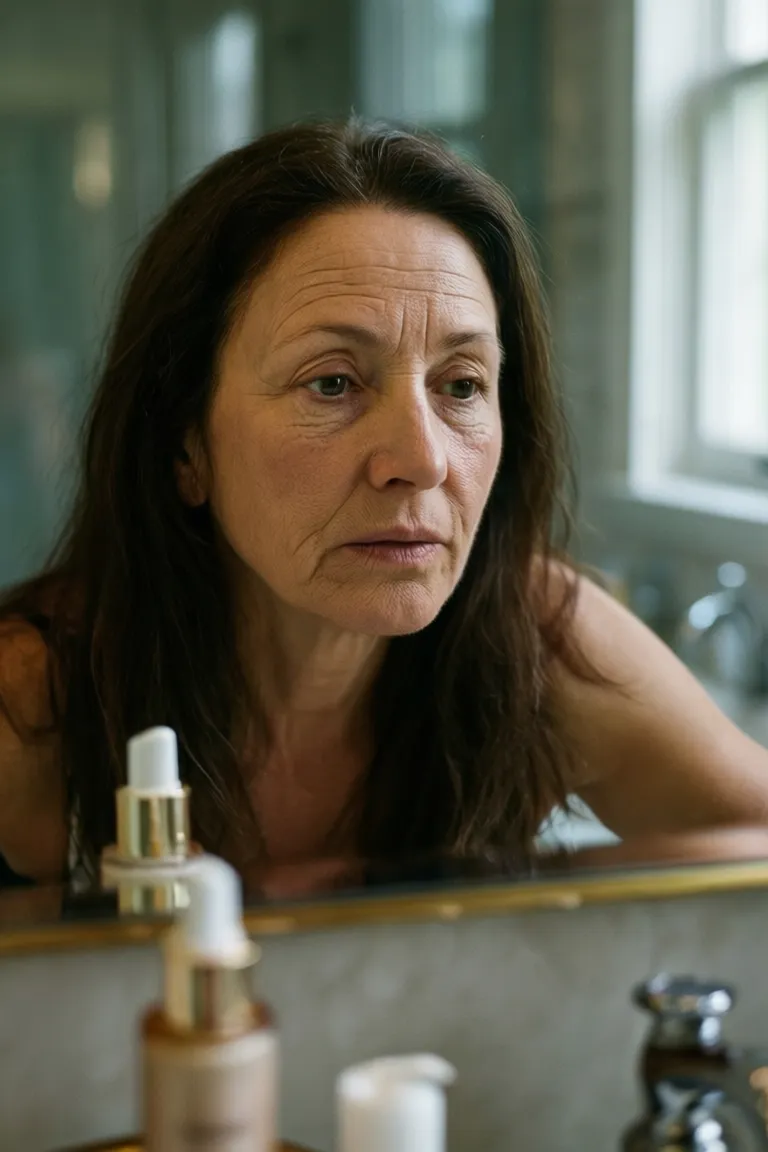
I was staring at a selfie my daughter had taken of us, her face glowing with that effortless 20-something smoothness, and all I could see were the trenches framing my smile. They weren’t just laugh lines anymore; they had taken up permanent residence. At 52, I’d always felt vibrant. I meal-prepped, logged my 10,000 steps religiously, and prided myself on a skincare routine that had been consistent for decades. But that photo was a brutal, high-definition reality check. The fine lines I’d been casually monitoring had deepened into undeniable wrinkles, especially around my eyes and mouth, and they seemed to whisper a narrative of aging I wasn't ready to accept. A wave of self-consciousness, sharp and unfamiliar, washed over me. I wasn't trying to look 30 again; I just wanted my face to reflect the energy I still felt inside. That desperate, quiet longing is what led me down the rabbit hole of "miracle" creams and straight to the glossy, promising world of Skinception.
The marketing was a siren song for someone in my exact emotional state. The websites and testimonials spoke of "clinically proven" reductions, "firming" results, and "dramatically younger-looking skin." The before-and-after photos showed women who looked like me, transformed. I read about the "patented" ingredients and felt a surge of hope. This wasn't some fly-by-night product; it seemed legitimate, scientific, and specifically engineered for mature skin like mine. I convinced myself that this was the solution—a sophisticated, high-end answer to my problem that I could apply in the comfort of my own bathroom. So, I took a deep breath, clicked "purchase," and invested what felt like a small fortune for a three-month supply. I awaited my package not just with anticipation, but with the relief of someone who believes they’ve finally found the answer.
My Initial Hope and Why I Chose Skinception for My Wrinkles
The decision felt less like a purchase and more like an investment in my confidence. After that jarring photo, I spent nights scrolling in the soft glow of my tablet, searching for something that could turn back the clock just a few years. My motivation wasn't vanity; it was a deep-seated desire for congruence. My body felt strong from yoga, my mind was sharp from my work, but my face was telling a different, older story. Skinception’s promises hit every single one of my vulnerable points. They talked about "deep wrinkles" specifically, not just fine lines. They used phrases like "stimulate collagen" and "improve skin elasticity," which sounded like they addressed the root cause, not just surface-level hydration. The packaging in the promotional material looked professional and luxurious, a far cry from the drugstore staples I’d been using.
The allure of 'miracle' anti-aging claims What truly sold me, and what I think sells so many of us, was the language of transformation. It wasn't presented as a mere moisturizer; it was a "therapy," a "treatment." The before-and-after photos weren't just about slight improvements; they showcased what appeared to be significant changes in nasolabial folds and crow's feet. In my hopeful state, I didn't see marketing—I saw proof. I imagined myself in that "after" photo, my skin smoother, my reflection matching my inner vitality. The emotional investment was profound. I wasn't just buying a cream; I was buying into the possibility of reclaiming a piece of how I felt. I remember thinking, "If this works as they say, it will be worth every penny." That initial research phase, fueled by hope, completely overshadowed any skeptical voice questioning if topical creams could really deliver such dramatic results.
Understanding common motivations for seeking wrinkle solutions I think many of us arrive at this point not from a place of frivolity, but from a quiet crisis of identity. You look in the mirror and the person staring back doesn't quite match the person you feel you are inside. For me, it was the dissonance between my active lifestyle and the static lines on my face. I wasn't seeking perfection; I was seeking alignment. Skinception, and products like it, market directly to that ache. They promise to bridge that gap, to restore harmony between your outer appearance and your inner self. It’s a powerful, almost spiritual promise when you’re feeling lost. You’re not just treating skin; you’re treating a feeling.
The Reality Check: What Happened When Skinception Didn't Deliver
The package arrived in sleek, professional packaging, and I began my new ritual with the reverence of a believer. Week one was all about texture and scent. The cream felt rich, absorbed nicely, and didn’t irritate my sensitive skin. I’d apply it morning and night, studying my face in the magnifying mirror, looking for the slightest hint of change. By the end of week two, I was sure my skin felt "plumper." Was that a result, or was it just the moisturizing effect? I gave it the benefit of the doubt. I marked my calendar for the 4-week point, the timeframe many reviews suggested for "initial results."
Detailed timeline of product use and observations Week four came and went. The specific wrinkle areas I was targeting—the stubborn lines from my nose to my mouth and the crinkles at the corners of my eyes—looked exactly the same under my careful scrutiny. My skin was hydrated, yes, but the architecture of those wrinkles was unchanged. A flicker of doubt appeared. I revisited the website, re-read the claims, and doubled down. Maybe I needed the full 8-12 weeks for the "cumulative" effect. So, I persisted, even skipping a weekend trip to avoid breaking my routine. Week eight was the real turning point. I took another photo in the same harsh bathroom lighting as my original "before" mental snapshot. I placed them side-by-side on my computer screen, zooming in with a critical eye. My heart sank. The difference was negligible. The skinception results were disappointing, to say the least. There was no "dramatic" improvement, no visible firming. The deep wrinkles I had spent a fortune to target were still deeply present.
The emotional toll of unmet expectations The financial sting was one thing, but the emotional toll was heavier. I felt foolish. I had let myself believe in a fairy tale, and the letdown felt personal, like a commentary on my own judgment. I had tried skinception and still have wrinkles, and that failure chipped away at the confidence I was trying to rebuild. I stopped wanting to be in photos again. The frustration was a low-grade hum in the background of my days. I’d catch my reflection in a store window and feel that little jolt of disappointment all over again. Comparing my personal experience to the advertised results wasn't just an exercise in logic; it felt like a betrayal. I had done everything "right"—consistent use, patience, belief—and the product had not held up its end of the bargain. This is the core of the honest skinception review no results that so many are searching for: the validation that it wasn't just them, that their disappointment is real and shared.
Beyond the Hype: Unpacking Why Skinception Might Not Be for Everyone
The disappointment eventually curdled into a stubborn curiosity. Why didn't it work? Was my skin just uniquely broken? I needed to understand, so I started digging beyond the sales copy into the drier, less glamorous world of cosmetic chemistry and dermatology blogs. My journey to understanding began, and it was humbling. I learned that while Skinception contains some good ingredients like peptides and antioxidants, their concentrations and the product's overall formulation might not be potent enough to tackle established, deep wrinkles on mature, post-menopausal skin like mine. My skin's natural collagen production had slowed significantly; it likely needed a more aggressive, targeted approach than a general "anti-aging" cream could provide. It made me wonder if am I wasting money on collagen skincare products or do they really help.
Analyzing Skinception's key ingredients and their actual efficacy The promises of "collagen stimulation" are common, but the reality is that stimulating meaningful new collagen production with a topical cream is a high bar. It requires ingredients at certain concentrations, with the ability to penetrate deeply enough to signal to your fibroblasts (the collagen-producing cells). For superficial fine lines, certain ingredients can plump the skin temporarily by drawing in water, creating the illusion of reduction. But for the etched-in lines I had—the kind that are visible even when my face is completely relaxed—the product seemed to just sit on the surface, providing hydration but no structural change. This was a crucial lesson in understanding realistic expectations for topical treatments versus deeper structural issues. My experience with skinception for fine lines might have been different if my concerns were milder and more superficial. For me, it was like trying to fill a canyon with a light dusting of snow.
The role of individual skin types and conditions Furthermore, I realized I had fallen into a classic pitfall: I had chosen a product based on marketing that spoke to my fears, not on a diagnosis of my skin's specific needs. I had no idea if my wrinkles were primarily due to collagen loss, volume depletion, repetitive motion (dynamic wrinkles), or sun damage. Skinception, like many broad-spectrum products, is designed to be a "shotgun" approach—hoping something in the blend works for you. But at 52, my skin wasn't a blank slate; it had a specific history and set of conditions. I was throwing a general solution at a complex, personalized problem, which is a recipe for the skinception didn't work for me why scenario so many of us face.
My Journey to Finding What Actually Works for Mature Skin (After Skinception Failed)
Frustrated but now armed with a sliver of understanding, I knew I needed a new strategy. The blind faith approach was over. The first and most pivotal step was booking an appointment with a dermatologist. I was nervous, fearing I’d be dismissed as vain, but it was the absolute game-changer. Instead of guessing in the dark, I got a professional assessment under bright lights. She was kind, asked about my history with Skinception, and nodded understandingly. She explained that my deeper nasolabial folds were a combination of collagen loss and slight volume descent, while my crow's feet were dynamic lines from a lifetime of smiling. A one-size-fits-all cream was never going to address both effectively. The idea of finding a truly effective solution reminded me of my search for the best stretch mark cream that worked for my thighs and hips.
Consulting dermatologists: professional insights and personalized advice She introduced me to the world of evidence-based ingredients with robust clinical data, not just marketing copy. She prescribed a topical retinoid (tretinoin), explaining it was the gold standard for actually increasing collagen turnover and improving skin texture at a cellular level. "It tells your skin cells to behave like younger versions of themselves," she said. She also recommended a stable vitamin C serum for daytime antioxidant protection to fight free radicals and a peptide-rich moisturizer to support barrier function. This combination was tailored, purposeful, and each product had a specific job. Alongside this, she emphasized the non-negotiable foundation I’d been taking for granted: rigorous sun protection with a high-SPF mineral sunscreen every single day, without fail. We also discussed lifestyle factors—increasing my water intake, ensuring quality sleep (a challenge during perimenopause!), and even looking at my diet's impact on inflammation. For the deeper lines, she suggested I could consider non-invasive treatments like a small amount of filler or laser therapy down the line, managing my expectations by explaining these as "complements" to a solid topical routine, not replacements. This holistic, personalized plan was the complete opposite of my skinception review with no results. It was a roadmap, not a magic potion.
Evidence-based ingredients that show clinical efficacy Transitioning to this new routine wasn't instant magic either. The retinoid caused redness and peeling for the first few weeks (the dreaded "retinization"). But this time, I understood why it was happening—my skin was literally purging old cells and rebuilding—so I could tolerate it. I started slowly, twice a week, buffering it with moisturizer. After three months, the changes were subtle but real. My skin texture was smoother, like fine-grit sandpaper had been replaced with something silkier. The overall tone was brighter, less sallow. This was the progress I had been desperate for with Skinception. The science behind these treatments is fascinating, with studies like Efficacy of combined treatment with human adipose tissue stem cell-derived exosome-containing solution and microneedling for facial skin aging: A 12-week prospective, randomized, split-face study highlighting advancements.
Navigating the Landscape of Real Solutions: A Realistic Comparison
After my consultation, I was overwhelmed by options. Was I supposed to do everything at once? My dermatologist helped me understand that effective anti-aging is a spectrum, from foundational habits to medical interventions. To make sense of it all for myself, I created a simple framework that finally helped me see where I had gone wrong with Skinception (it was trying to be a Category 2 solution for my Category 3 problems) and where I needed to be.
| Approach | Best For | Realistic Timeline for Visible Change | Key Consideration |
|---|---|---|---|
| Lifestyle & Prevention Foundation | Everyone, especially as a starting point or for early signs | 3-6 months for subtle improvements in glow and texture | Non-negotiable for any other approach to work long-term. Includes SPF, diet, sleep, hydration. |
| Targeted Topical Actives (Retinoids, Vitamin C, Peptides) | Treating texture, fine lines, tone, and stimulating collagen | 2-3 months for initial results; 6+ months for significant collagen improvement | Requires consistency, patience through potential irritation, and knowledge of ingredient compatibility. |
| In-Office Procedures (Lasers, Chemical Peels, Microneedling) | Addressing deeper wrinkles, significant sun damage, loss of elasticity | 1-2 weeks post-procedure for initial results; series often needed for best outcome | Involves cost, downtime, and should be performed by a licensed professional. Complements topicals. |
| Injectable Treatments (Fillers, Botox) | Specific, deep static wrinkles or dynamic lines that don't respond to topicals | Immediate to within 2 weeks | Temporary, requires maintenance, and results are highly dependent on practitioner skill. |
Seeing it laid out like this was a revelation. Skinception marketed itself as a bridge between Category 2 and 3, but in reality, for mature skin with established damage, it often only delivers Category 1 benefits (hydration) with Category 2 promises. Understanding this spectrum helped me build a rational, layered plan instead of hoping for a unicorn product. It showed me the best anti-aging products for women over 50 after failed attempts aren't products at all—they're informed strategies.
Scientific Evidence
Lessons Learned: How to Avoid My Mistakes When Choosing Anti-Aging Solutions
My expensive detour with Skinception wasn't a total loss; it was a brutally effective teacher. The tuition was high, but the education was permanent. I learned that the most important step in any anti-aging journey is to prioritize clinical evidence over marketing claims. Look for ingredients like retinoids (retinol, tretinoin), vitamin C (L-ascorbic acid), niacinamide, and peptides, which have decades of research behind them. The flashy "patented complex" might just be a proprietary blend of these same ingredients in lower, less effective concentrations. For those looking for alternatives, exploring natural ways to reduce wrinkles without Botox can also be a part of a comprehensive approach.
Understanding your skin type and specific concerns You must become a student of your own skin. Is your primary concern dryness, deep static wrinkles, loss of elasticity, or hyperpigmentation? What to do when anti-aging creams don't work is to stop, reassess, and seek expert guidance. Don't just buy the next hyped bottle. I now understand the critical importance of patch testing and giving any new product, especially actives like retinoids, a proper 3-6 months of consistent use to judge its efficacy fairly. Skinception didn't get that long because the lack of any early shift was a red flag, but with my new retinoid, I pushed through the initial irritation because I understood the science behind the process.
Setting realistic expectations for anti-aging results Most importantly, I've recalibrated my expectations. Topical products can produce fantastic improvements in texture, tone, and fine lines, but they are not magic erasers for significant volume loss or deep structural folds. Setting realistic expectations for anti-aging results saves you money and heartache. It allows you to appreciate the 30% improvement instead of mourning the missing 70%. Finally, know when to call in the pros. If you're feeling lost or disappointed, a consultation with a dermatologist or licensed aesthetician is the best investment you can make—far better than gambling on the next hyped bottle hoping it will be the alternative to skinception when it failed me.
The Empowerment of Building a Personalized Routine
Letting go of the "miracle in a jar" fantasy was surprisingly liberating. The pressure was off. I now have a routine built on knowledge, not hope. My morning involves a vitamin C serum that smells like hot iron (a sign of stability, I learned), a peptide moisturizer, and that non-negotiable SPF 50 mineral sunscreen. My evening is dedicated to my prescription retinoid (used three nights a week, carefully) and a rich, reparative night cream. This routine isn't about chasing a fantasy; it's about consistent, evidence-based support for my skin's health, like brushing my teeth or taking my vitamins.
The changes have been gradual but undeniable. My skin is brighter, more even-toned, and the finer lines have softened. The deeper wrinkles are still there, but they look less harsh, like they've been softened around the edges. I've made peace with them as part of my story—they're the map of my smiles and my worries. I'm now considering the professional treatments my dermatologist suggested, not out of desperation as I was with Skinception, but as a planned, informed next step in my journey, like a tune-up for a car I plan to drive for a long, long time.
I've shifted from seeking a single product to save me to cultivating a layered, intelligent approach to skin health. That shift in mindset—from passive consumer to active participant—has been the most powerful anti aging effect of all. That is the true best anti-aging product for women over 50 after failed attempts: not a cream, but a mindset of education, patience, and self-advocacy.
Frequently Asked Questions
Q: I used Skinception for three months like you did and saw nothing. How long should I really give an anti-aging product before deciding it doesn't work? A: It depends entirely on the ingredient's job. For basic moisturizers or hydrating serums, you'll know if they agree with your skin within a week or two. For active ingredients that change skin cell behavior—like retinoids, peptides, or strong antioxidants that build collagen—you need a minimum of 8 to 12 weeks of consistent, daily use to see initial results. Significant collagen remodeling takes 6 months or more. If, like me, you see zero change in hydration or texture after 8 weeks on a product making big claims, it's likely not the right formula for your specific wrinkles. Patience is key, but so is recognizing a dud.
Q: Is seeing a dermatologist really worth the cost if I'm just dealing with wrinkles and not a medical issue? A: Absolutely. Think of it as an investment that saves you money in the long run. A one-time consultation fee is often less than the cost of two bottles of a high-end, hyped cream like Skinception. The dermatologist can accurately diagnose your specific type of wrinkles, rule out other issues (like rosacea or sun damage masquerading as aging), and create a targeted plan. This prevents you from wasting hundreds of dollars over years on products that aren't formulated for your needs, which is exactly what happened in my story. They give you a map, so you stop buying tickets for the wrong train.
Q: What's the one ingredient I should prioritize if I'm over 50 and have been disappointed with everything else? A: The most evidence-backed ingredient for treating wrinkles and stimulating collagen is a retinoid (like prescription tretinoin or over-the-counter retinol). It's the gold standard for a reason. However, it can be irritating, especially for mature skin that may be drier. Start slowly (2-3 times a week), always pair it with a good moisturizer, and never, ever skip sunscreen the next day. If retinoids are too much, bakuchiol is a gentler, plant-based alternative with some similar benefits, though the research is newer.
Q: Are there any red flags I should watch for in anti-aging product marketing after your experience? A: Yes, my radar is now highly tuned. Be deeply wary of phrases like "instant results," "miracle cure," or "works like Botox in a jar." Be skeptical of before-and-after photos that look too perfect or could easily be attributed to different lighting, angles, or makeup. If a company heavily promotes a "secret" or "patented" ingredient but provides no accessible third-party clinical studies you can look up, it's a marketing tactic, not a transparency practice. Also, if a review section seems to have only glowing 5-star testimonials with similar language, that's a sign.
Q: I have sensitive, reactive skin and am terrified of strong actives like retinoids. What should I do? A: You can still use effective ingredients! The key is to start with the gentlest forms and introduce them like you're making a new friend—slowly and carefully. Instead of retinol, try a retinaldehyde or a bakuchiol serum. Use a low-concentration niacinamide (5%) or a gentle peptide serum. Always introduce one new product at a time, patch test behind your ear or on your jawline for a few days, and "buffer" actives by applying them over your moisturizer until your skin builds tolerance. Listen to your skin—a little redness is normal with actives; burning or stinging is a sign to pull back.
Q: How important is sunscreen really, and what kind is best for mature skin that might be drier? A: I cannot overstate this: it is the single most important product in any anti-aging routine, period. Sun exposure is the primary external cause of collagen breakdown and exacerbates every sign of aging you're trying to fight. For mature, often drier skin, look for a broad-spectrum SPF 30 or higher. Mineral sunscreens with zinc oxide and/or titanium dioxide are often less irritating, provide excellent protection, and many new formulations are no longer chalky or heavy. Look for ones labeled "moisturizing" or with hydrating ingredients like hyaluronic acid. Apply it every single morning, rain or shine, indoors or out, as the last step in your routine. It's the foundation that makes all the other work possible.
📌 Love this guide? Save it on Pinterest!
Pin Skinception Didn't Work for My Wrinkles: My 2026 Honest Review & What Did to your board so you can come back to it later.

